The CIBIL score has always been considered the ultimate measure of creditworthiness of a person in the financial ecosystem of India. Is it, however, a real gauge of the financial soundness of an individual? Numerous voices in the industry, and increasingly public, claim that one three-digit figure cannot tell the entire tale of reliability of a borrower. It tends to ignore changing behaviors, alternative cues and context of financial behaviors. According to a 2025 report by Edelweiss, 20–25% of personal loans, credit card accounts, and consumer durable credit in India are being issued to borrowers with CIBIL scores below 650. Consequently, the use of CIBIL can create bias and curtail the chances of worthy credit seekers.
How CIBIL score Influences Credit Score? (Use Cases)
Regardless of its shortcomings not being to act as the fraud detection solutions, the CIBIL score still strongly impacts the risk scoring of any individual:
1. Loan & Credit Approvals
CIBIL is commonly used to determine eligibility by financial institutions. An increase in the score (750 and above is an excellent score) tends to be associated with the easier availability of the loan and preferential interest rates.
2. Interest Rate Determination
High-score borrowers tend to incur reduced costs of borrowing, because lenders equate a high score to a reduced risk of default.
3. Employment & Rentals
In parallel sectors:
They do credit checks on employers up to 60 percent during hiring. Credit information is occasionally used to determine risk by auto insurers, telecoms and landlords.
4. Financial Products & Segmentation
CIBIL also frequently determines access not only to loans but also to credit cards, increased credit limits, and custom financial products that augment its position at the heart of the credit ecosystem.
Does CIBIL Act As A Fraud Detection Solution During Customer Onboarding?
CIBIL-driven customer onboarding introduces both benefits and challenges:
Pros
- Speed & Standardization: Flagging of applicants in thresholds is done automatically, making decisions straight forward.
- Regulatory Clarity: It is easy to explain credit results when they are related to numeric scores.
Cons
- Superficial Evaluation: Does not consider new-income users, gig workers, micro-entrepreneurs, or thin credit files.
- Exclusion Risk: This is a risk that could prevent access to services by underserved individuals who qualify.
- Opaque Rejection Reasons: Borrowers do not usually get a reason why an application has been rejected, the score itself disguises individual rationale.
Thus CIBIL works soley based on the Credit profile of the interests. A person can have a high credit score and still be a fraudster. Thus CIBIL does not act as the fraud detection solution
What’s “Above” CIBIL Score? Alternative Explanations of Credibility
As of December 2024, approximately 451 million Indians had limited or no formal access to credit, highlighting the potential reach of alternative scoring methods. There were many synthesized IDs on the rise and the credit score was not alone adequate enough to determine the genunity of the candidate. Thus, the lending sector was on the look for the best fraud detection solution. Going beyond the numeric scoring requires assessment of credit on a multi-dimensional basis:
1. Alternative Credit Scoring
- Leverages GST returns, bank statements, and cash flow data, especially helpful for first-time borrowers.
- Predictive models are also informed by digital footprints and behavioral signs (e.g., mobile use, pattern of digital transactions).
2. Machine Learning & Big Data Analytics
- Social network analytics and call-detail records, app usage and others can be combined with AI algorithms to increase the statistical accuracy and profitability of risk models.
3. Behavioral and Psychometric Signals
- Even when no traditional credit history is available, behavioral credit models follow repayment patterns, online actions, and psychometrics in order to calculate risk more effectively.
How the Financial Sector Can Leverage Fraud Detection Solutions?
Composite risk assessment methods: Financial institutions are benefiting by incorporating composite risk assessment methods:
1. Inclusion and Financial Deepening
- Providing other credit models to unbanked or underbanked populations opens new markets and grows the financial inclusivity. This includes analyzing their social credit and AML compatibility as a part of their credit scoring. Simultaneously it identifies any forged or synthesized documents acting as the fraud detection solution as well
2. Enhanced Risk Precision
- Greater datasets and enhanced analytics enhance the prediction of defaults acting as the fraud detection solution, and reduce non-performing loans.
3. Faster and Fairer Onboarding
- Incorporating onboarding behavioral and contextual data in real-time can enhance the speed of onboarding and at the same time bias reduction that is a characteristic of conventional scoring.
4. Transparency and Explainability
- Models that use artificially intelligent (AI) and various signals will better explain credit decisions, and allow borrowers to understand and change their financial behavior.
How Atna Has A Unified Risk Intteligence Platform
A standout in this holistic risk paradigm is Atna, which provides the next-gen credit + onboarding tools to the financial sector along with fraud detection solutions that combats today’s brute-force techniques:
1. Atna Score
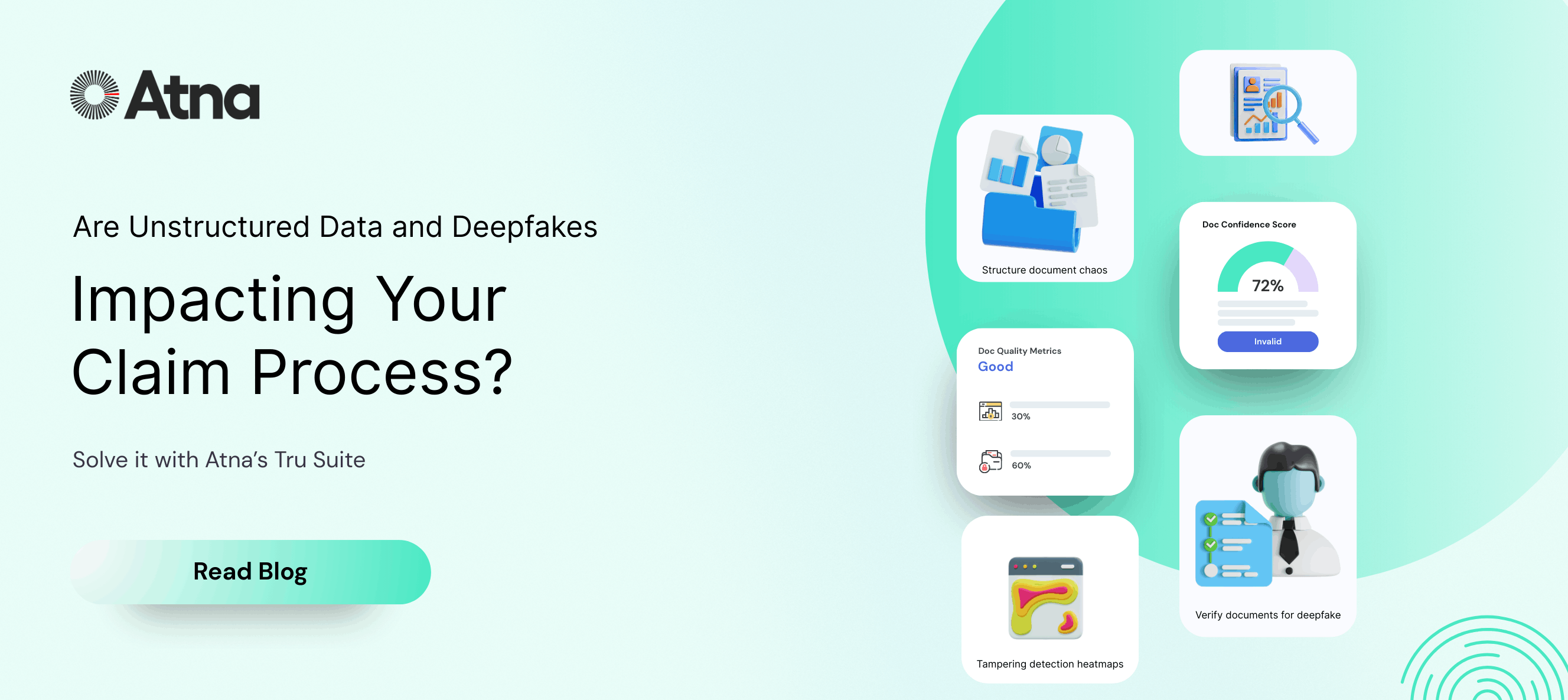
AI-driven, unified risk measure combining identity and behavioral analytics, plus document analytics, to make decisions with confidence and speed.
2. Digital Footprinting
Checks device, location, user-behavior signals to indicate anomalies and suspicious patterns in real-time -improving fraud detection and reducing onboarding friction.
3. AI-driven KYC / KYB
Verifies documents (KYC and KYB) (including GST, ownership structure, and regulatory compliance) using automation.
4. AML Intelligence & Deepfake Detection
Couples anti-money laundering checks and deepfake detection to verify authenticity and integrity of the identities submitted by users.
5. Predictive Risk Scoring
Integrates behavioral indicators, document confidence, and digital footprint into a predictive scoring model- allows BFSI players to dynamically measure risk and can adjust thresholds based on use cases.
Atna’s Parameters vs. the Credibility They Uncover
| Parameter Checked by Atna | Credibility Insight Uncovered |
| Identity Verification ( KYC/KYB) | Confirms authenticity of individuals & businesses, reducing impersonation and fake onboarding. |
| Document Confidence Scoring | Ensures submitted IDs, GST, PAN, and ownership docs are genuine and tamper-proof. |
| Digital Footprinting | Reveals behavioral consistency, location, device, IP usage, exposing fraud or bot-led applications. |
| Behavioral Analytics | Tracks repayment patterns, income flows, spending habits, signaling long-term financial discipline. |
| AML & Sanction Checks | Detects links to money laundering, financial crimes, or restricted entities. |
| Deepfake Detection | Validates biometric and video KYC, ensuring applicants are who they claim to be. |
| Atna Score | Combines all signals into a dynamic risk index that predicts probability of default or fraud. |
Conclusion
The CIBIL score is still a helpful benchmark in credit checking today- but not a comprehensive or adequate measure of credibility or can acts as the fraud detection solution. It smears over true borrowers who are credit history deficient, and its opaqueness can aggravate customer onboarding. The future looks in the combination of conventional metrics and the analysis of alternative data, AI-related behavioral expectations, and comprehensive risk indicators.
In that future, BFSI sectors will be able to improve:
- Expand inclusive lending responsibly,
- Improve underwriting precision,
- Frictionless onboarding
- Strengthen fraud and identity assurance.
An example of this new generation of credit and onboarding intelligence is Atna, where identity, behavior, document analysis, and predictive risk are combined in a single platform, acting as the best fraud detection solution. It provides financial institutions with more than a means to gauge credit, but a real appreciation of credibility in context.
Having gone beyond relying on a single score, institutions can open to new, underserved markets, make smarter decisions, and build a more equal financial ecosystem.